2008 Election Results and Analysis - Part Deux

Our monthly Constitution Party of Utah Executive meeting was held Saturday, 11/15/2008. From that meeting some additional information came to light regarding this past election cycle.

Nationwide, the Constitution Party candidate for President, Chuck Baldwin, came in fifth place. The vote totals went: Obama (66,744,472 - 52.7%), McCain (58,272,729 - 46.0%), Nader (697,128 - 0.6%), Barr (510,477 - 0.4%), Baldwin (181,769 - 0.1%), and McKinney (152,243 - 0.1%).

Yet as mentioned in the first installment of the 2008 Election Results and Analysis, Chuck had his greatest percentage return from the state of Utah! In fact, in Utah, Chuck Baldwin did better than any of the other third-party candidates. The third-party results in Utah break down as follows: Chuck Baldwin (11,131 - 1.26%), Ralph Nader (7,644 - 0.86%), Bob Barr (6,461 - 0.73%), Cynthia McKinney (908 - 0.10%), and Gloria La Riva (246 - 0.03%). In Millard county, Chuck received 5.59 percent of the vote!

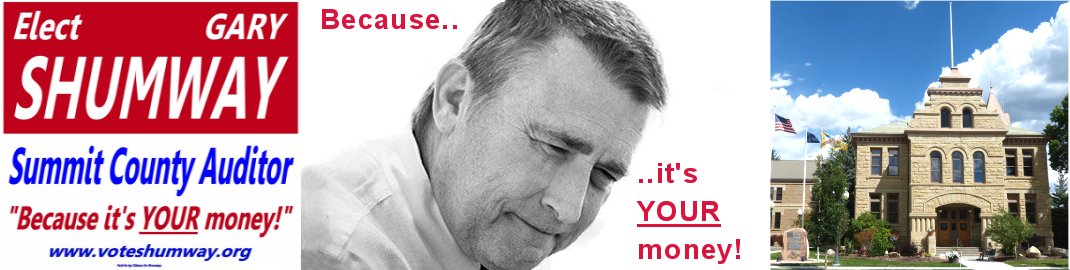
Looking at the vote from Summit County we see a different story. In fact, of the 29 counties in Utah, Chuck Baldwin had his worst showing there. In Summit County, the vote totals for President went: Obama (9,194 - 56.40%), McCain (6,691 - 41.04%), Nader (123 - 0.75%), Barr (102 - 0.63%), Baldwin (73 - 0.45%), McKinney (14 - 0.09%), and La Riva (1 - 0.01%). Baldwin's poor showing in Summit County can be viewed in three ways. Either the Constitution Party Chair for Summit County (yours truly) did a crappy job in promoting Baldwin, yours truly receiving nearly 10 percent of the vote in the Council race is even more remarkable, or a combination of the two. Probably the latter.

Aside: I met Chuck in person several months ago and I have made it clear in my blog, Red Pills, that I supported Chuck. I like Chuck. Being a Baptist Minister and being involved with the Moral Majority years ago, his ardent religious fervor did dampen my enthusiasm a bit but he was still miles ahead of the others, IMHO. In fact, I verbalized to Chuck that his emphasis on God was a bit of a distraction for me, politically speaking, but that I understood it given his background. When I told some of my Libertarian friends I was campaigning on the Constitution Party ballot they opined, "oh, the Libertarian Taliban". Cute, guys. That said, let me be clear that I believe our human rights are God given, so God does have a place in the political arena but I would be more religiously inclusive. End Aside.

Anyway, as to supporting Chuck in Summit County, I had to buy the yard signs for him out of my own pocket and since I was also financing my own campaign, I did not, regrettably, spend that much on his signs. Regardless, what signs I did buy, I put them up (one of them subsequently disappeared). Additionally, I did not mention Chuck's candidacy much in my interviews or debates (I think once or twice?) Partly because no one really asked and partly because I was spending what time I could trying to champion the 'vote person, not just party' concept. So I do blame myself somewhat for Chuck's poor showing in Summit County. Not that even getting 100 percent of the vote would have changed anything, but being the 29th Utah county in Baldwin support is not good (the 28th county was Daggett with 0.46%).

As to good news coming from the Executive meeting: in 2004 the Constitution Party kept it's ballot status in 13 states. Yet in 2008, we kept ballot access in 20 states, including Utah! This is huge, as gaining ballot access via the petition process can cost in the neighborhood of $200,000! Retaining ballot access in Utah saves us a lot of time and money. For the record, I understand that the Libertarian Party also retained ballot access in Utah. Excellent!

Speaking of Libertarians, I wonder how the candidates of the two parties (Libertarian vs. Constitution) faired in Utah when pitted against each other. Looking the 2008 election results over, this is what I found:
U.S. President: Baldwin (C) 1.26 percent vs. Barr (L) 0.73 percent
U.S. Rep. D-1: Pearson (C) 2.4 percent vs. Buchman (L) 2.2 percent
U.S. Rep. D-2: Arndt (L) 1.29 percent vs. Emery (C) 0.85 percent
State Auditor: Stoddard (L) 6.05 percent vs. Proctor (C) 3.71 percent
State House D-36: Kruger (L) 1.37 percent vs. Beglarian (C) 0.64 percent
State House D-49: Crawford (C) 2.12 percent vs. Bonsal (L) 1.62 percent
State House D-55: Ray (C) 4.15 percent vs. Regehr (L) 2.54 percent
State House D-71: Ferrin (C) 3.44 percent vs. Cramer (L) 1.98 percent

The first thing that struck me is that of all the partisan races in 2008, only eight were contested by both Libertarian and Constitution candidates. I think this is good but probably just an indication of how difficult it is to get third-party candidates running.

The next thing that struck me is that in only one race (State Auditor) was there more than a 1.6 percent difference in the vote tallies for the two candidates. In other words, the races were close and more an indication of either the roughly equal number of Libertarians and Constitution Party voters in the state or that it was difficult for one of the two candidates to stand out over the other.

Lastly, from the above data, it can be seen that the Constitution Party candidate prevailed over the Libertarian in five of the eight contested races. With the limited data it's tough to reach a conclusion but it appears that the two third-parties are relatively equally matched or are not seen to be that dramatically different by Utahns. Maybe for third-party candidates, the voter actually does vote for the person and not just the party!

Now while I was looking over the election results for the Libertarians I was struck by their lack of candidates. There were only 13 Libertarian candidates from Utah (excluding the Presidential and VP candidates) while there were 55 Constitution Party candidates. The Libertarians had less then a third of the candidates as the Constitution Party. I know in past years the number of candidates was greater. Maybe the Libertarians are going through some politics within their own party or maybe some of the Libertarians made the switch to the Constitution Party (yours truly for example.)

Since there were so few Libertarians running, I thought maybe they made up for it in the number of votes garnered. Wrong. Of the four Libertarian candidates in three-way races (Rep v. Dem v. Lib) the highest percentage of votes was only 4.2 percent by Brent Zimmerman, who has run in years past. That said, Stoddard (L) did relatively well in the State Auditor race as he received 6.05 percent of the vote in a four-way race and handily beat the Constitution Party candidate.

Looking at the data another way, let's see how what the percentage of the partisan races had third-party candidates. There were 68 third-party candidates but as mentioned above there were seven races in which Utah Libertarians were pitched against Utah Constitution Party candidates. Thus there was at least one third-party candidate in 61 of the partisan races. Other than the President race, there were, by my count, some 141 partisan races. Thus there was a third-party candidate in 43.3 percent of the races. As the number of Republican and Democrat candidates in the races approach 100 percent this is one of the reasons so few Utahns vote straight party tickets for Libertarians and Constitution Party candidates. To become more competitive we must field more good third-party candidates. Third-party candidates were seen in about 50 percent of the State Senate and House races but were sorely lacking in the county races. In fact, there were no Libertarian candidates in any of the 44 partisan county races and only seven Constitution Party candidates!

Speaking from my experience only, some of the reasons we do not see more competitive three- or four-way races is because:
1. Nearly a third of all voters vote straight party and those straight party votes go to Democrats and Republicans, not third-party candidates.
2. Many, dare I say most, Democrats and Republicans can get financial assistance in their campaigns by private citizens, PACs, companies, and their parties. Nearly all third-party candidates are only able to raise a fraction of what the Reps and Dems can. This puts third-party candidates in a distinct disadvantage in campaign financing, thus advertising.
3. As, to my knowledge, no third party candidate has been elected to office in Utah and often poll in the single digits percentage wise, it is difficult to maintain esprit des corps. This makes it difficult for the third-party candidates to make a serious run at an office and thus the public too often views voting for a third party candidate as a 'wasted vote'.
4. Due to the lack of electoral success, it is difficult to get individuals to help in third-party campaigns. Further, it is difficult to get home owners to place third-party signs in their yards based on peer pressure and not wanting to be seen championing a losing candidate (as if there are points given for voting for a winning candidate - vote your conscience!)
5. There is a lot of time involved in running an effective campaign. Too many third-party candidates do not take their candidacy seriously or do not want to spend the many hours on an ultimately futile attempt.

Well we can crunch numbers all night and as they say, hindsight is 20-20. But the real question is what am I going to do going forward for the third-party movement and more specifically the Constitution Party. In short, over the next year and a half, I intend to accomplish the following:
1. Be able to instruct on the Constitution and related documents.
2. Hold instruction on the Constitution and related documents, preferably at least once in each precinct.
3. Establish an on-line instruction course on the Constitution and publicize in Summit County. This can be an existing course, e.g., IOTC, or one I design.
4. Endeavor to have three individuals actively running on the Constitution Party ballot in 2010.

Obviously I have my work cut out for me. I better get at it.